The new funding, provided by RMB and Investec Bank Limited, is another significant step in boosting access to affordable and clean energy for South African businesses, with first power expected in 2026.
SunCentral 2 will follow SunCentral 1, which reached financial close at the end of 2024, also at 114 MW. Together with SunCentral 3, these projects form Phase 1 of the broader SunCentral vision, totalling 342 MW. At full scale, SunCentral is planned to reach 1 GW, positioning it as one of the country’s largest solar initiatives designed specifically for one-to-many, bilateral wheeling.
David McDonald, CEO at SolarAfrica, says: “Businesses want power they can trust – clean, affordable and predictable – and SunCentral is being built exactly for that purpose. It’s encouraging to see the confidence from our funding partners as we move into the next stage of delivery.
“More than a big solar project, SunCentral is a long-term infrastructure investment that gives companies the ability to manage their costs, cut emissions, and reduce their reliance on utility power that is often vulnerable to unpredictable tariff hikes. This next step gets us closer to bringing that value to even more South African businesses.”
As with the first plant , SunCentral 2 includes dedicated community-upliftment initiatives, ensuring local residents share in the social and economic benefits created by the project. Job creation, education, local procurement and skills development will continue to form a core part of the programme, supporting economic activity around the site in partnership with the project’s principal contractors.
SunCentral is also a key pillar of SolarAfrica’s overall wheeling pipeline – totalling 3 GW – which is currently under development across the country. By combining utility-scale renewable generation with a more flexible delivery via wheeling, SolarAfrica is helping companies access greener energy without the upfront capital outlay traditionally associated with on-site solar systems.
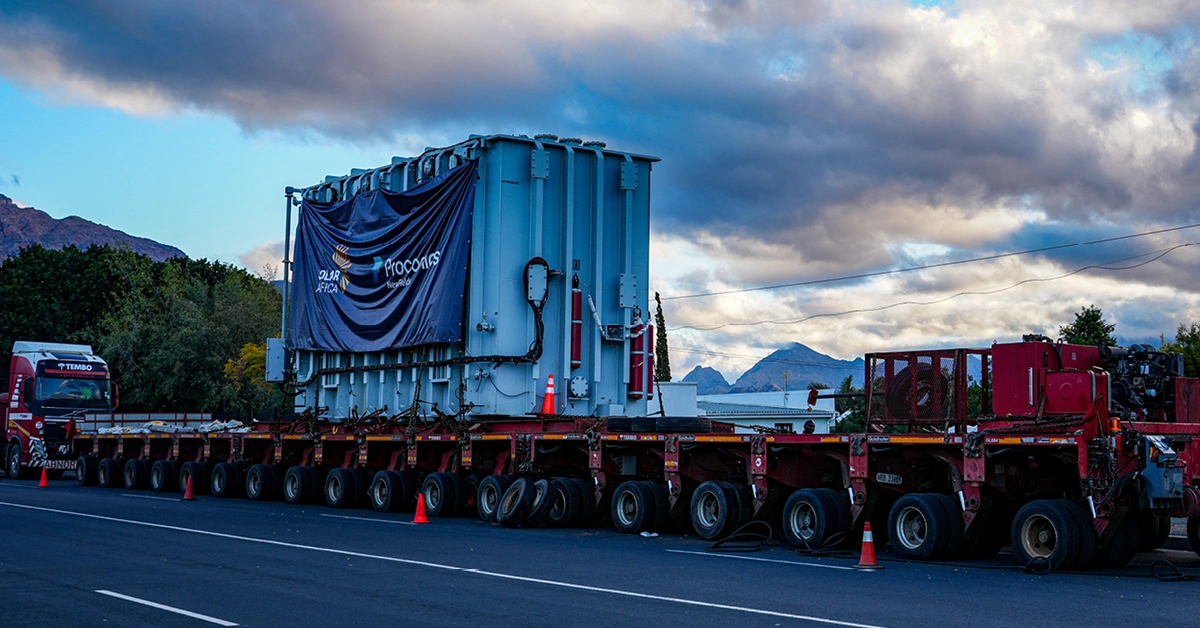
A portion of funding from each SunCentral plant is allocated directly to the development of the project’s Main Transmission Substation (MTS). Engineered for up to of green-power evacuation capacity, the MTS strengthens the national grid while enabling future renewable generation to connect more efficiently.
“With wheeling, we have a model that puts control back into the hands of commercial and industrial customers. Instead of just surviving tariff hikes, it allows companies to plan for growth with a cleaner, more dependable energy mix,” says McDonald.